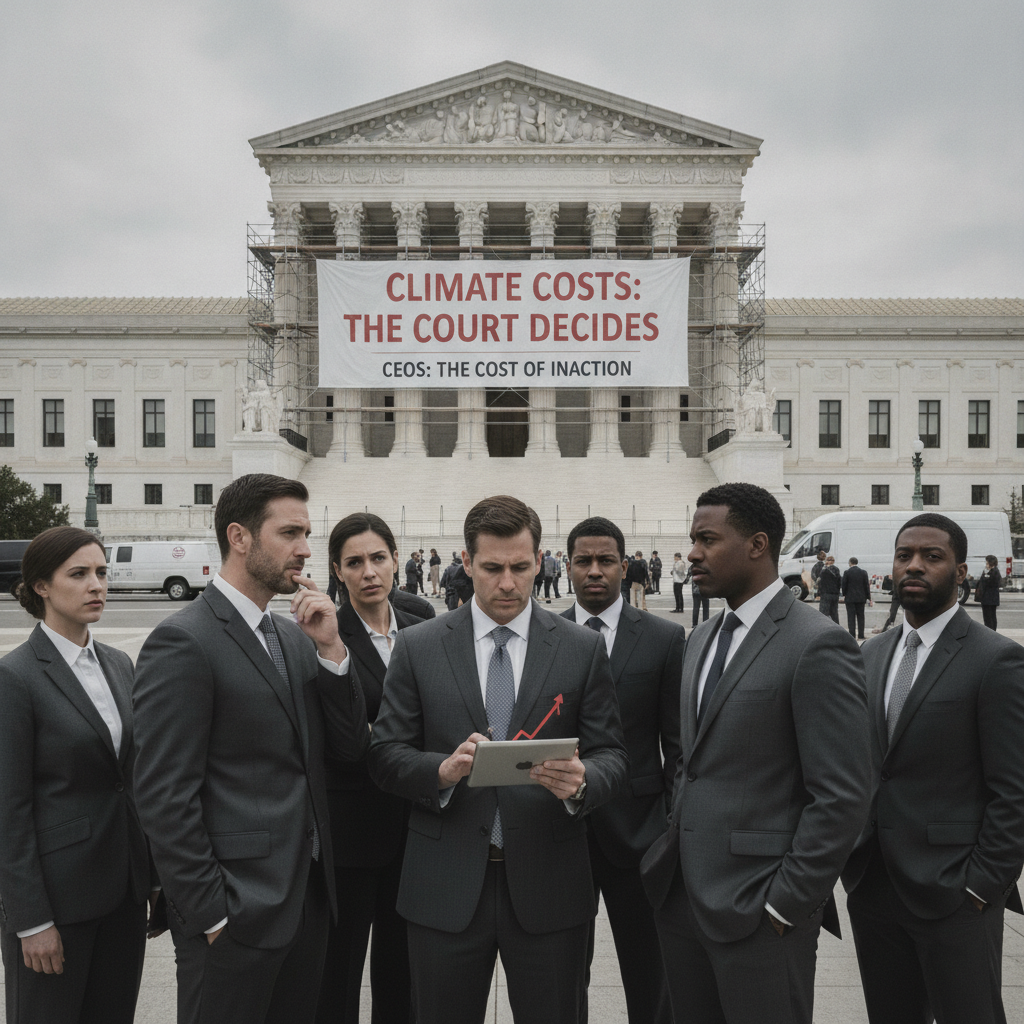
The Supreme Court has opened its new term by taking up a dispute that could determine whether state and local governments can hold oil companies responsible for costs linked to climate change.
What the justices are considering
The case, Suncor Energy (U.S.A.), Inc. v. County Commissioners of Boulder County, stems from Boulder County’s lawsuit against ExxonMobil and Calgary-based Suncor Energy. The county alleges that the companies misrepresented the risks associated with their products.
At the center of the dispute is whether federal law prevents states and local governments from relying on their own statutes to seek damages tied to global climate change. The Supreme Court’s decision could determine whether similar claims can move forward under state law.
Why businesses are watching
The immediate stakes include potential legal exposure for oil and gas companies and the effect such claims could have on industry profits. The case may also carry implications beyond fossil fuels, including for the IPO ambitions of artificial intelligence companies such as Anthropic, according to the source material.
Justice Samuel Alito has recused himself from the case. A watchdog group, Court Accountability, found that he made up to $2.9 million from holdings in oil and gas companies between 2005 and 2024 and continues to own such stocks.
The broader corporate question
The legal issue is narrow, but its business significance is wider: companies may face greater scrutiny over the costs associated with alleged misrepresentation and inaction. The Supreme Court’s ruling will determine the legal path available to governments pursuing climate-related claims.
For executives, the case places the potential cost of doing nothing alongside the cost of addressing climate risks.